
A Research Secondment, a Family Adventure, and a Chance to Learn
This summer, I am undertaking an international research secondment at the John A. Shepherd Research Laboratory within the University of Hawai’i Cancer Center. The placement is supported through my UK Research and Innovation (UKRI) Future Leaders Fellowship, which is funding my work to advance research and practice in anthropometry and body composition assessment.
Why Hawai’i?
The obvious question is why Hawai’i?
The John A. Shepherd Research Laboratory is internationally recognised for its work in body composition, quantitative imaging, and the development of innovative methods to assess health and disease risk. The group has been at the forefront of advancing technologies such as DXA, 3D optical body scanning, bioimpedance analysis (BIA) and AI-enabled approaches to understanding body composition and metabolic health. The laboratory also hosts one of the most comprehensive body composition research facilities in the world, working across populations from infancy through to older adulthood.
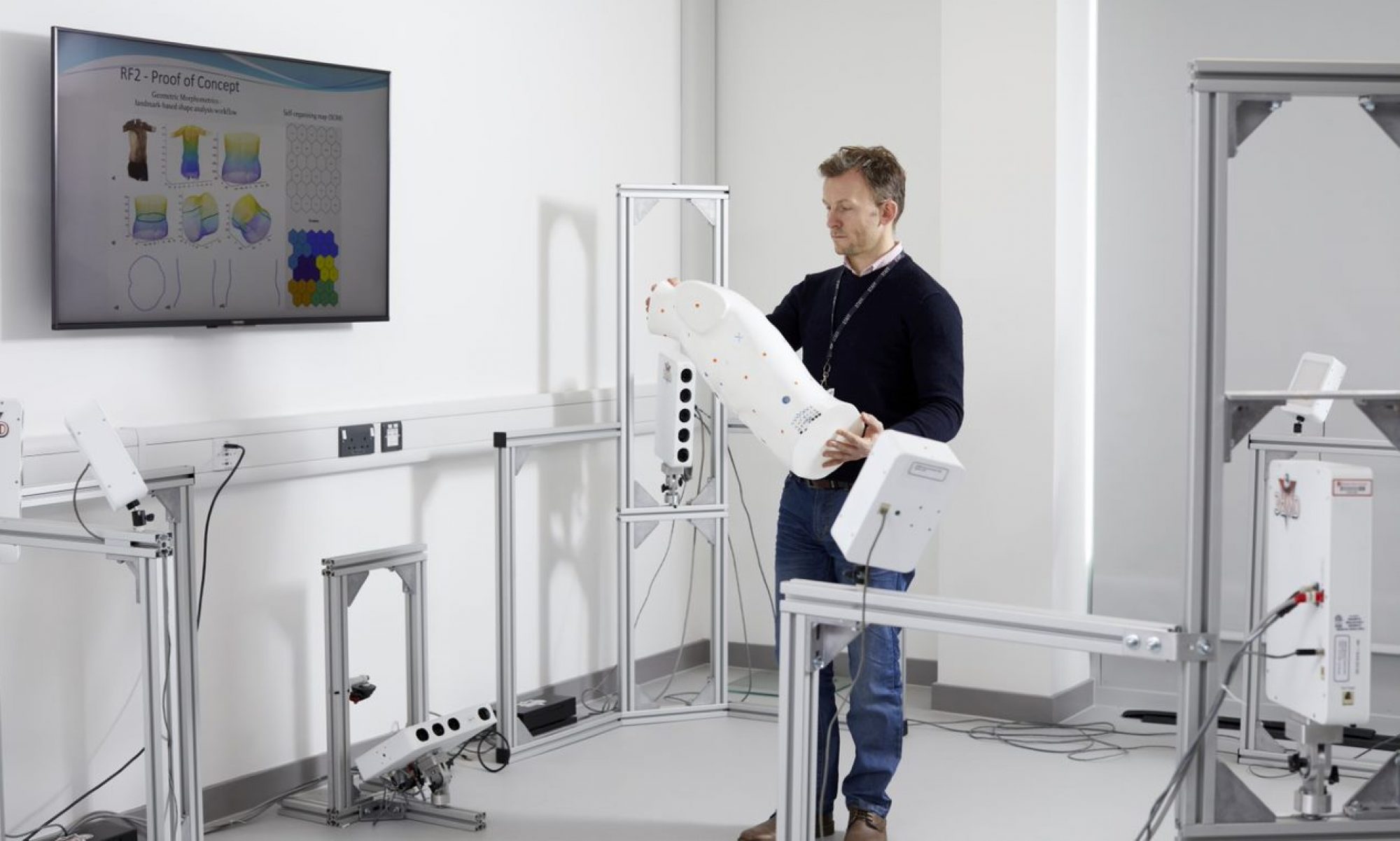
For me, the alignment with my own research could not be stronger. My Future Leaders Fellowship focuses on advancing anthropometry, the science of measuring the human body, and improving how body size, shape and composition are assessed and applied across health, sport, ergonomics and public health settings. Many of the challenges that my team and I are working on in the UK, including 3D body scanning, methodological standardisation, body composition assessment and the translation of measurements into practical tools, are areas where this laboratory has global expertise. Spending time here provides an invaluable opportunity to learn from internationally recognised leaders, develop collaborations, and explore how complementary approaches can strengthen both our research programmes.
A family adventure
One thing that makes this experience slightly different is that I haven’t travelled alone. I am here with my family, including our children, and that adds a whole extra dimension to planning and undertaking an international secondment. Like many academics, I have often looked at opportunities abroad and wondered how realistic they are when balanced against family life. Over the coming weeks, I plan to share not only what I am learning from the research environment but also reflections on travelling internationally for work with a family in tow: the practicalities, the challenges, the surprises and the lessons learned.
Before anyone assumes this is all work and no play, I should be honest: when an opportunity arises to spend several weeks in Hawai’i, it would be madness not to experience some of what makes these islands so special. Alongside the research, we’ve deliberately built in time to explore, spend time together as a family, and experience a part of the world that we may never have the opportunity to live in again. The secondment is first and foremost a professional opportunity, but it is also a family adventure.
This blog series will therefore serve several purposes.
I thought it would be useful to explain why I’m planning to write these blog posts in the first place. Whenever I look back on major professional experiences, I often find that the most valuable parts are not necessarily the things that make it into formal reports. They are the conversations over coffee, the unexpected challenges, the ideas sparked by chance encounters, the moments of uncertainty, and the small observations that gradually change how I think about my work. Those experiences can be incredibly influential, yet they are often forgotten once normal routines resume.
During the secondment, I’ll undoubtedly be keeping notes, diary entries and audio recordings. However, I know from experience that those tend to capture what happened rather than what it meant. Writing these blogs will give me an opportunity to pause, organise my thoughts, and reflect more deeply on what I am learning as the secondment unfolds.
This blog series will therefore serve several purposes.
The first is reflection. Research careers move quickly. New ideas emerge, conversations happen, opportunities arise, and before long many of those experiences begin to blur together. By writing regularly, I hope to create a record of not only what I do during the secondment, but also how my thinking develops along the way.
The second is accountability. I am incredibly fortunate to have this opportunity through my Future Leaders Fellowship. The fellowship represents a significant investment in my development as a researcher and future research leader. I feel a genuine responsibility to make the most of every conversation, meeting, collaboration and learning opportunity that emerges during my time in Hawaiʻi. Writing regularly will help me remain intentional about how I use this opportunity and provide a record of what I learn along the way.
The third is knowledge sharing. I hope these reflections will be useful to colleagues, students, collaborators and perhaps other researchers considering an international placement of their own. Many secondment reports focus on outputs and outcomes. Far fewer discuss the practical realities of relocating, building collaborations, balancing family life, adapting to a different culture, or navigating the inevitable challenges that arise when living and working in a new environment. If these posts can make that process feel a little more accessible, provide practical insights, or help someone else prepare for a similar experience, then they will have served an important purpose.
My focus during the secondment will be to learn as much as possible about body composition and anthropometry research, strengthen international collaborations, explore emerging technologies and approaches, and bring those lessons back to benefit our work in the UK. Put simply, I intend to squeeze every possible ounce of learning from this experience and share as much of it as I can.
Over the coming weeks, I’ll write about the research itself, the people I meet, the ideas that emerge, and the lessons I take away. I’ll also share some of the less glamorous but equally important aspects of the experience, including the realities of international travel, relocating with a family, settling into a new environment, and figuring out how to make everyday life work on the other side of the world.
At the end of the secondment, I plan to bring everything together into a final reflection on the experience as a whole: what worked well, what surprised me, what I learned, what I would do differently, and what advice I would give to anyone considering a similar opportunity.
For now, though, the adventure is still about to begin. Hawaiʻi is waiting, and I’m excited to see what the coming weeks will bring.