
Making every measurement count
REACH: Making Every Measurement Count invites researchers to help get the most from the REACH. Each visit asks a lot of young children and their families. We owe it to them to make every visit count. We would like to work with researchers in Sheffield and across the UK who could:
- use REACH data to answer questions in their own field
- add a measure, questionnaire or method that could sit alongside our sessions with minimal extra burden for children
We welcome ideas at any time. Our first step is a researcher roundtable on Wednesday 20 January 2027 at the Advanced Wellbeing Research Centre, Sheffield.
About REACH
REACH (Revolutionising and Evaluating Anthropometry for Children’s Health) is a UKRI Future Leaders Fellowship led by Dr Alice Bullas at Sheffield Hallam University. REACH aims to find the most accurate and suitable ways to measure children’s body size, shape and composition, and to understand what those measures tell us about health.
BMI remains the default measure of children’s body size, yet it estimates body fat poorly in children and in some ethnic groups. It also cannot separate fat from muscle or show which part of height and weight drives any link with health. REACH tests alternatives against reference methods.
REACH: Grow With Us
The REACH cohort, REACH: Grow With Us, sits at the heart of the fellowship.
- 400 children from diverse backgrounds across Sheffield
- Recruited at age 3 to 4 and measured once a year to age 9 to 10
- Data collection starts in September 2027
- Families who are often missed by research, including those from more deprived communities and ethnic minority backgrounds, are actively included
Children and families are helping shape how we run these visits through our co-design study, REACH: Little Bodies, Big Voices. The data will also seed Child Anthrobank, a planned repository dedicated to child body measurement.
What we plan to measure
The measures below come from our original fellowship application. They may change as co-design and piloting progress, and some may be simplified for the youngest children. The protocol is also open to additions where session time allows.
| Area | Measures | Methods |
|---|---|---|
| Descriptives | Age, gender, social background and ethnicity | Questionnaire |
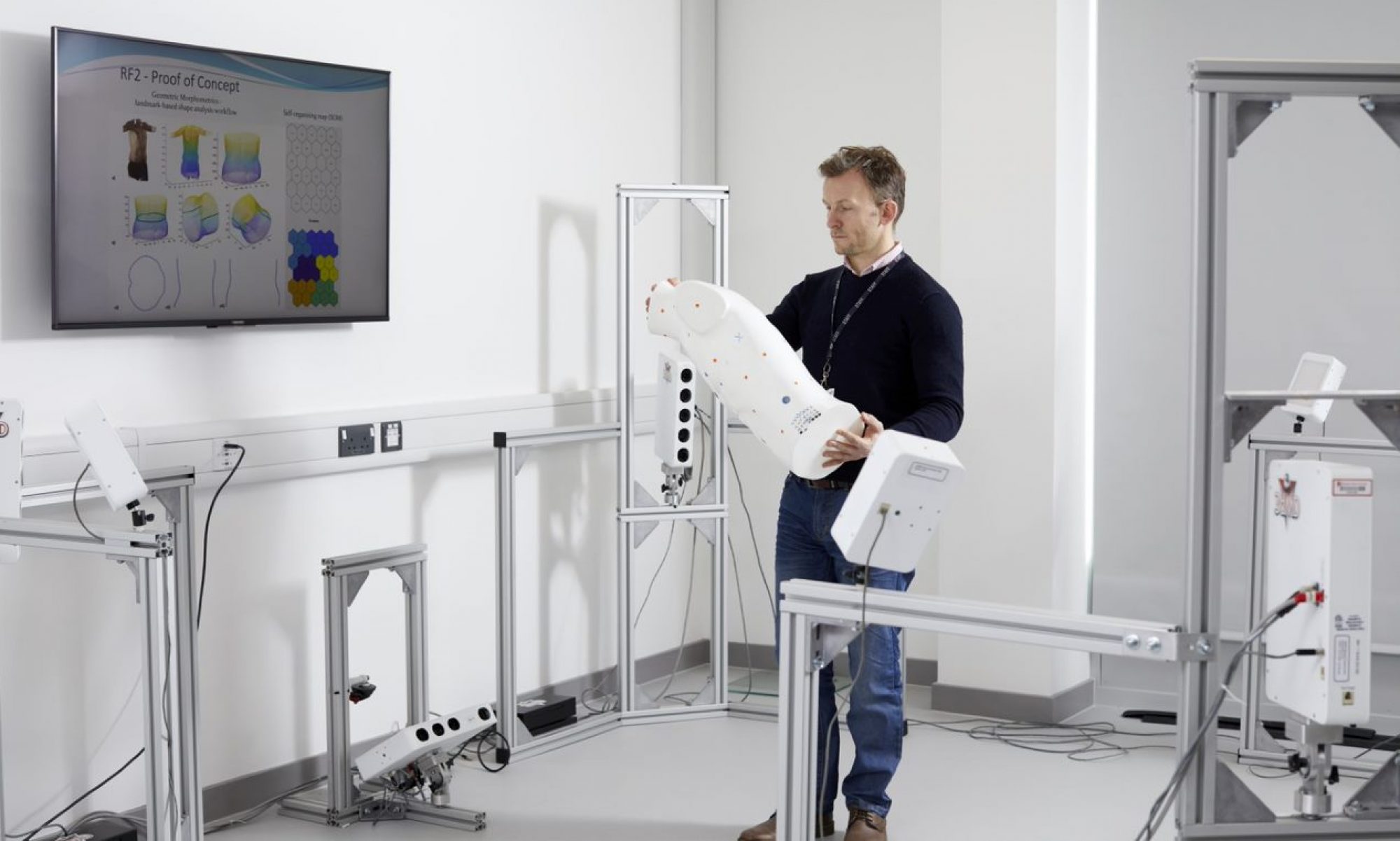
| External body size and shape | Standing and sitting height, body mass, girths, cross-sectional areas, total and segmental volumes and surface areas | Stadiometer, digital scales and 4D surface imaging |
| Body composition | Subcutaneous and visceral adipose tissue, lean muscle mass and liver fat | Whole-body MRI |
| Body composition (four-compartment model) | Bone mineral density, body volume, total body water and impedance | DXA, air displacement plethysmography and bioelectrical impedance |
| Body composition (field method) | Skinfold thickness at eight sites | Skinfold callipers |
| Cardiovascular health | Resting heart rate, systolic and diastolic blood pressure, carotid intima-media thickness and left ventricular mass | Automatic sphygmomanometer and ultrasound |
| Metabolic health | Fasting glucose and insulin, triglycerides, total, HDL and LDL cholesterol, and alanine transaminase | Fingertip blood sample, with numbing cream |
The cohort will allow us to examine:
- the causal relationship between adiposity and health in children
- the ability of external body measures to predict adiposity and, through it, health
- agreement between direct and indirect methods of body composition
We will examine each by body size, age, gender, social background and ethnicity. Our partners at the University of Westminster are also adapting their adult MRI analysis pipeline for children, with the aim of making it publicly available.
Ways to collaborate
We welcome researchers from any discipline, including child health, paediatrics, public health, nutrition, physical activity, psychology, child development, imaging, sensing, data science and health inequalities. Collaboration could take several forms:
- analysis of REACH data
- adding a measure, questionnaire or method to REACH data collection
- contributing data or expertise to Child Anthrobank
- joint grant applications and co-authored publications
- PhD co-supervision
- methodological or analytical expertise
- public and patient involvement
What any addition needs to meet
We want to say yes to good ideas, and we also need to protect the children and families who give us their time. Any additional measure would need to:
- fit within session time: visits already ask a lot of young children, so short, low-burden additions are most likely to be feasible
- suit children from age 3: methods need to work, and feel comfortable, for the youngest children in the cohort
- pass ethical review: every addition needs ethical approval before we can include it
- come with its own resources: REACH has no budget for additions, so anything needing extra equipment, consumables or staff time would need separate funding
We are happy to support funding applications for additions with letters of support.
Practical points to consider
- Visits include fasting blood samples, so they are likely to take place in the morning. Measures that need food, exercise or a particular time of day may be harder to fit in.
- MRI and DXA already make for a long visit, so additional imaging time is unlikely to be feasible.
- Blood samples are currently analysed on the day of collection. Storing samples for later analysis would need an ethics amendment and suitable storage.
- Access to REACH data will be through a data sharing agreement.
Get involved
There are three ways to get involved: join our researcher roundtable, request a phone call, or get in touch with an idea at any time.
Join our researcher roundtable
Our roundtable brings researchers together to explore how REACH data could support their work and what else we could collect alongside our sessions.
| Date | Wednesday 20 January 2027 |
| Time | 10:00 to 13:00, followed by lunch |
| Venue | Advanced Wellbeing Research Centre (AWRC), Sheffield Hallam University, Olympic Legacy Park, 2 Old Hall Road, Sheffield S9 3TU |
| Cost | Free |
| Places | Limited to 20 |
Format
The roundtable will be interactive and discussion-based. It will include:
- an introduction to REACH and the Grow With Us protocol
- short provocation talks from attendees
- small-group discussions on data use and possible additional measures
- a tour of the REACH measurement facilities [confirm]
- a networking lunch
Who should come
We welcome early career researchers, established academics and doctoral researchers. Attendees should be willing to contribute ideas, expertise and questions throughout the session.
Register for the roundtable
Complete our short registration form. The form takes around 10 minutes and asks about your research interests and ideas.
We will review all responses if the event is oversubscribed, aiming for a balanced mix of disciplines and expertise. We will contact everyone by [date] to confirm places or arrange a call.
Request a phone call
Can’t make the roundtable, or prefer to talk one to one? Select “Request a phone call” on the registration form, and Alice will arrange a time to talk.
Share an idea at any time
Making Every Measurement Count runs throughout the REACH fellowship. Ideas for using REACH data or adding a measure are welcome at any time. Please email a.bullas@shu.ac.uk with a short outline of your idea.
Frequently asked questions
I can’t attend on 20 January. Can I still get involved? Yes. Select “Request a phone call” on the registration form, and Alice will arrange a time to talk.
Do I need a fully formed idea? No. Early ideas are welcome, and the roundtable is designed to develop them together.
Will REACH fund my measure? REACH has no budget for additional measures. We are happy to support separate funding applications with letters of support.
When could an addition start? Data collection starts in September 2027. Additions agreed and approved before then could run from the first year. Additions approved later could join at a following annual visit.
Is the roundtable online? The roundtable is in person only. Phone calls are available for anyone who cannot attend.
Can I get involved if I work outside Sheffield? Yes. We welcome researchers from across the UK.
Contact
Please email Dr Alice Bullas at a.bullas@shu.ac.uk with any questions.