
In 2023-24, through funding from the Education Endowment Foundation (EEF), the TWiTCH pilot programme was evaluated by Durham University.
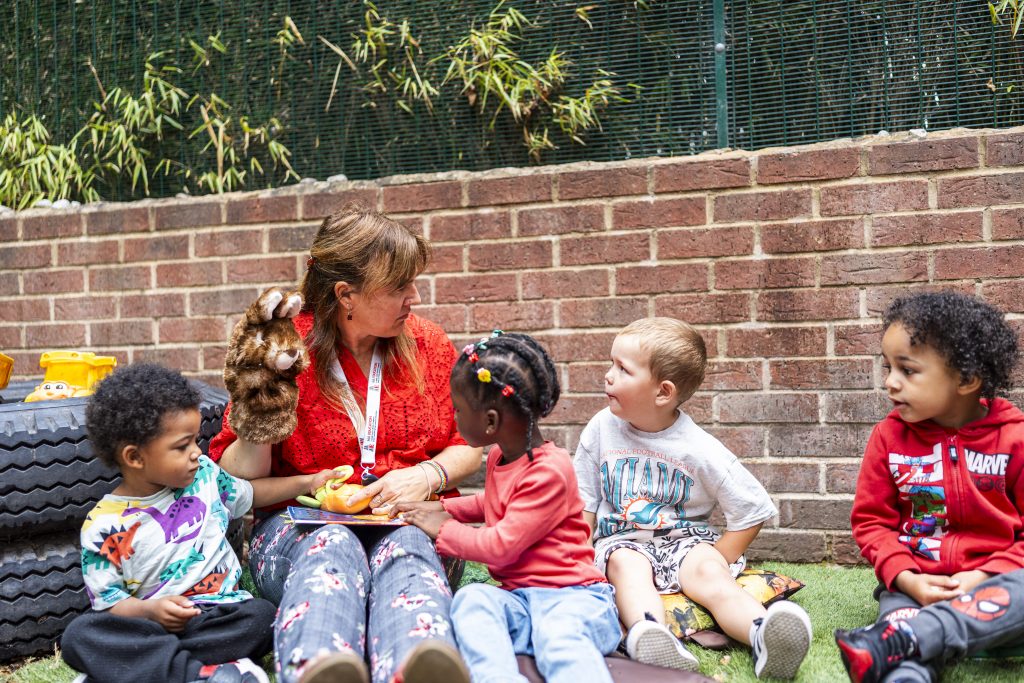
The evaluation explored the programme’s impact on early years practitioners interaction skills and children’s language, confidence, and engagement during story-based learning.
Overall, findings showed positive changes in practitioner confidence, classroom interaction, and children’s communication, indicating that TWiTCH is a promising approach for supporting early language development.
For Practitioners
- Improved questioning and discussion skills.
- Made greater use of reasoning-focused questions and reflection time.
- Increased confidence in leading language-rich activities.
For Children
Reports from practitioners suggested:
- Stronger enjoyment and engagement in stories.
- Greater confidence to speak, share opinions, and give reasons.
- Use of longer sentences and more expressive language.
- Improved reasoning and narrative understanding.
What This Means
These early results suggest that by building practitioners confidence in shared book reading and high quality interactions skills, TWiTCH has the potential to foster high quality language outcomes for young children.
Further evaluation will continue to build the evidence base as the programme is delivered more widely. To find out more and get involved without EEF funded TWiTCH Efficacy Trial, see the TWiTCH Efficacy Trial section.
The TWiTCH Pilot Evaluation Report
Title
Talk with tales for Children (TWiTCH) programme
Authors
Nadine Fitzfussell, Vic Menzies, Paivi Eerola, Johny Daniel, Kelly Burgoyne, Xiaofei Qi, Helen Cramman
Thank you to all the settings who took part!