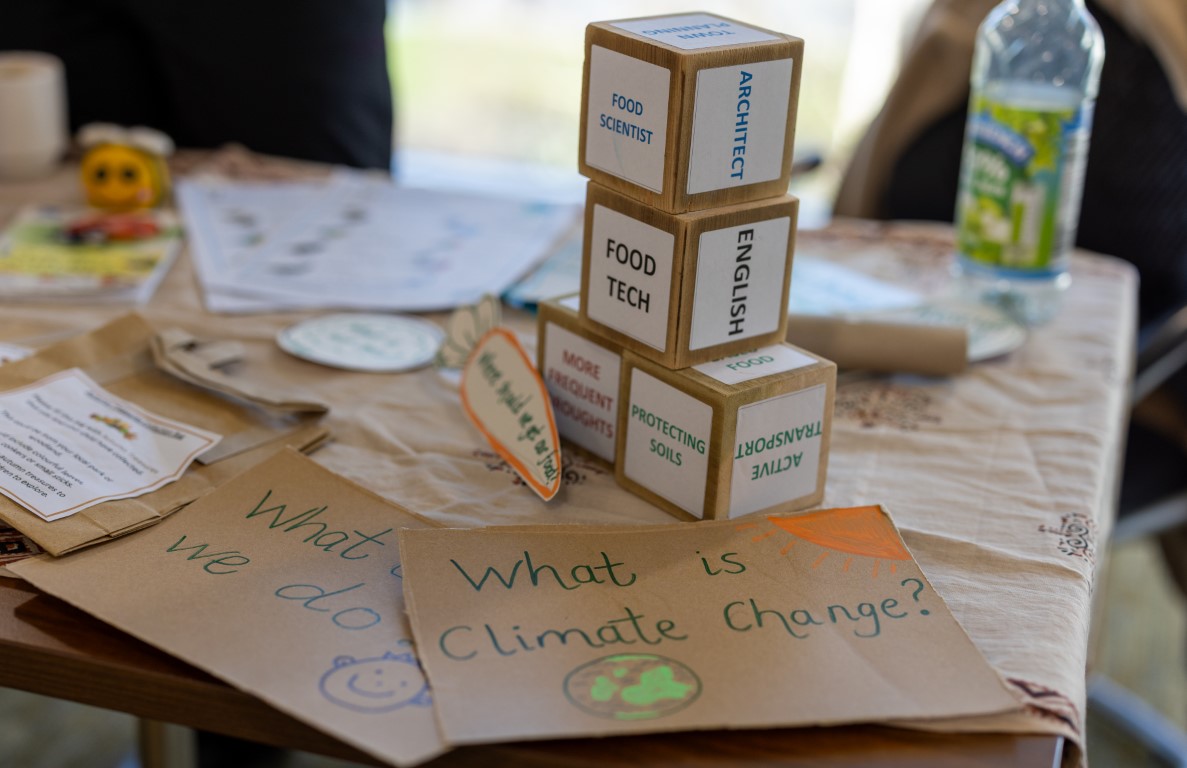
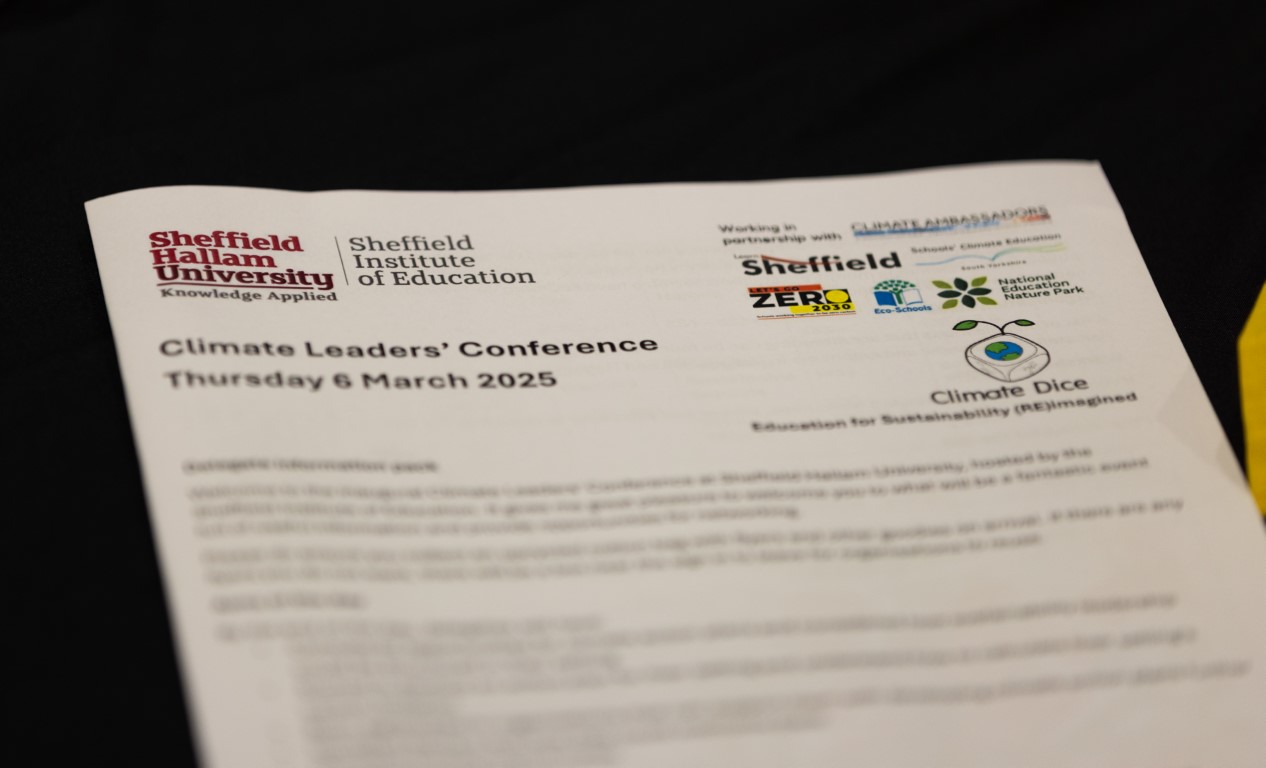
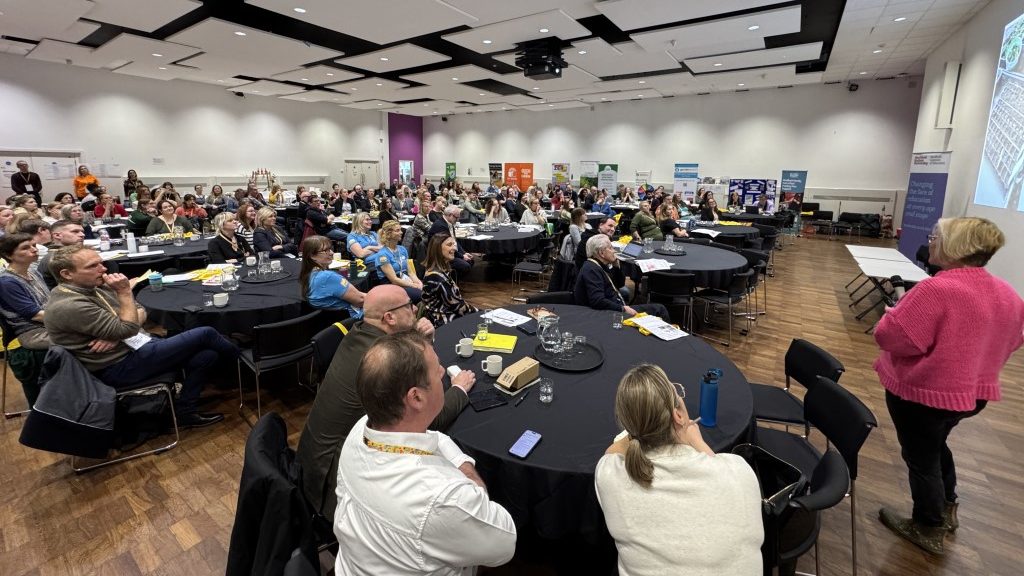
The Climate Leaders’ Conference was a free, one-day professional learning event held on Thursday 6 March 2025 at Sheffield Hallam University’s City Campus. It was organised by the Institute of Education as part of its work with the Climate Action in South Yorkshire Schools and Education Settings network. The conference was fully funded by Sheffield Hallam University and aimed to support leaders across education settings to take meaningful action on climate change, sustainability and biodiversity.
The programme included keynote presentations from senior school and trust leaders, workshops from a range of national and regional partners (including Eco-Schools England, National Education Nature Park, Climate Ambassadors and academic researchers), and practical sessions on developing Climate Action Plans.
Anticipated Outcomes
Before the event, we framed several key intended outcomes for participants. By the end of the day, attendees were expected to have:
Explored opportunities for developing climate action plans and leadership structures within their settings.
Begun creating or refining a Climate Action Plan, including techniques for calculating carbon footprints.
Been signposted to organisations and programmes that can support ongoing climate and sustainability work.
Identified potential barriers to climate action and strategies to overcome them.
Recognised sources of funding and external support.
These goals aligned with national ambitions in the 2021 Department for Education Climate Change and Sustainability Strategy, which calls for every education setting to nominate a sustainability lead and have a climate action plan in place by the end of 2025.
Who Attended
The conference brought together over 150 education professionals from across the UK, including leaders from:
- Early years settings, primary and secondary schools
- Colleges and further education
- Universities
- Local authorities
- Charities and intermediary organisations supporting education settings
Participants included trustees, governors, CEOs, heads, deputy heads, curriculum leaders, business managers, and eco-leads – with a strong emphasis on pairing eco-leads with senior leaders to maximise impact.
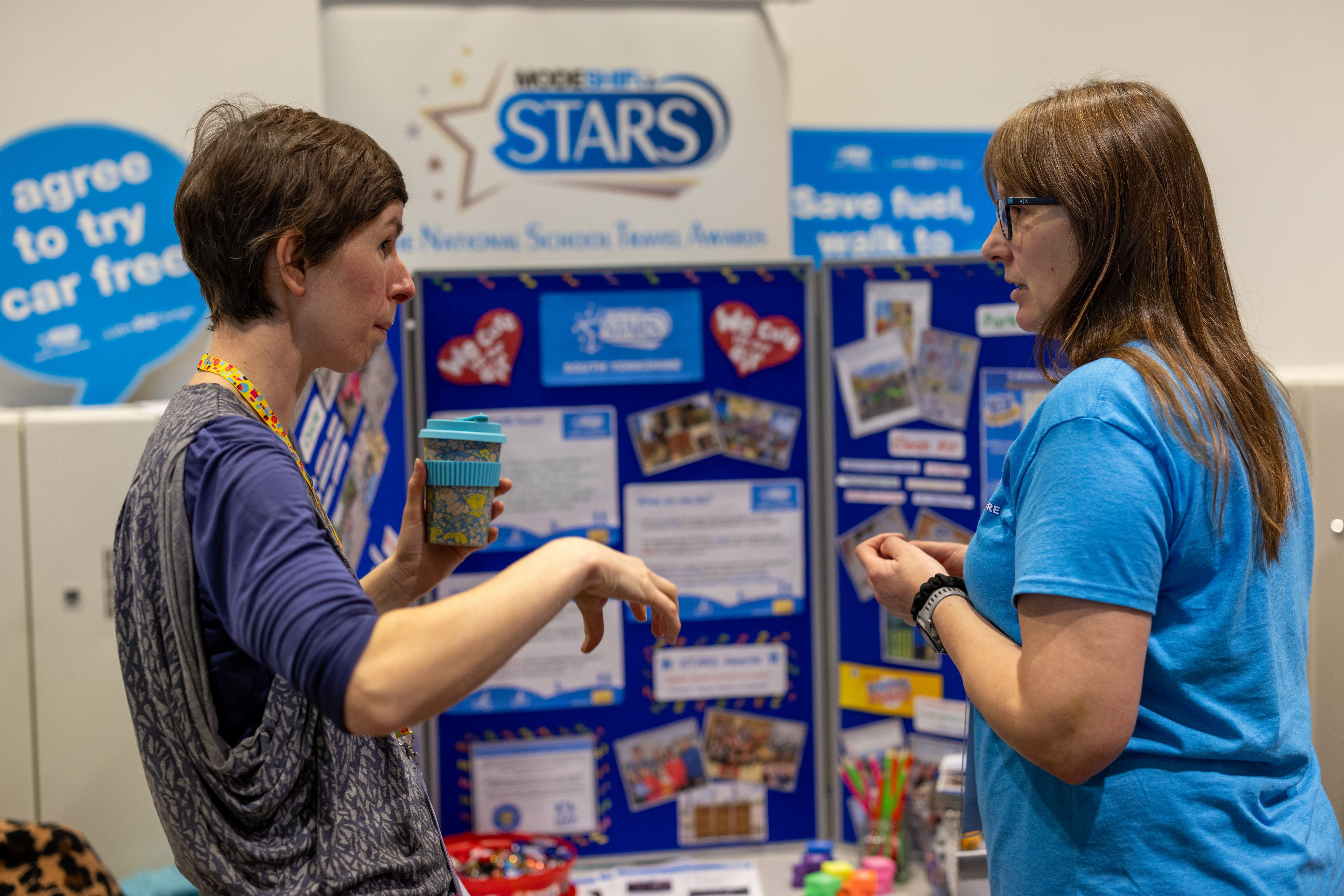
The day also featured contributions from a wide range of sector partners through workshop sessions and stalls, such as Carbon Literacy Project, Global Action Plan, Energy Sparks, Solar for Schools, Eco-Schools Carbon Calculator and more, enabling broad access to tools, resources and collaborative networks.
Evaluation
A longitudinal evaluation report of the conference was compiled, tracking the sustained impact of the event at three and six months after attendance. Key findings highlighted that:
- 100% of respondents at three-months reported taking at least one action as a result of attending the conference, with many reporting multiple actions.
- By six-months, many participants had maintained, refined or embedded their actions into ongoing practice, moving from individual efforts toward wider institutional influence.
- Participants reported increased confidence in leading climate education and embedding sustainability within curricula and strategic planning.
- Persistent barriers noted included time constraints, workload pressures, resource limitations, and the need for institutional support to sustain long-term change.
The evaluation concluded that the conference effectively supported capacity-building and provided a foundation for sustained climate and sustainability action, particularly where organisational leadership and structures supported follow-through and embedding of practices.
You can read about the evaluation on the research publications page.