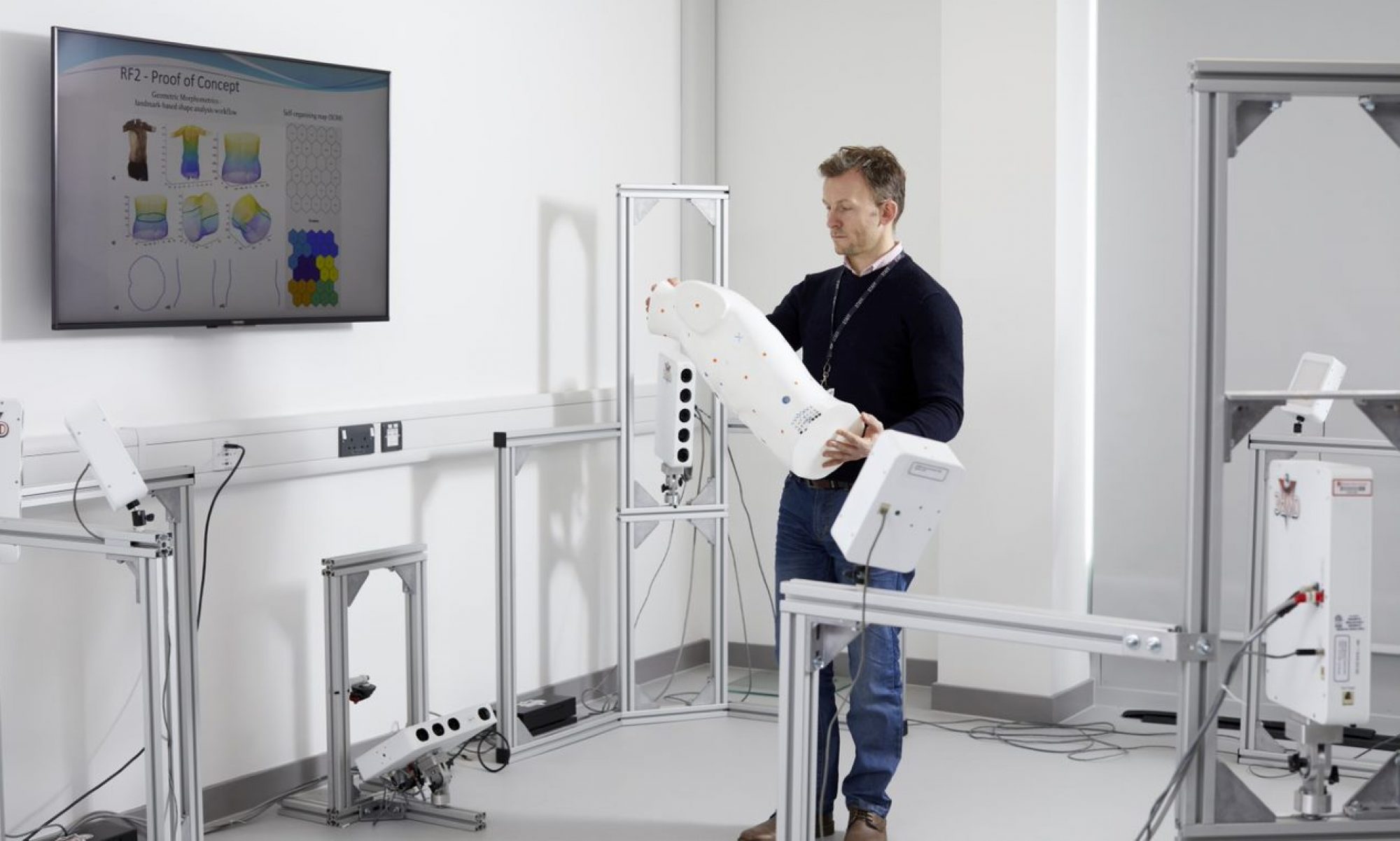

This summer (August 2026) I (Alice Bullas) am undertaking an international research secondment at the John A. Shepherd Research Laboratory within the University of Hawaiʻi Cancer Center. Supported by my UK Research and Innovation (UKRI) Future Leaders Fellowship. This is blog 2 of 8.For more background content please see my introductory blog (blog 1 of this series).
The Practical Reality of Getting Set Up in Hawaiʻi
When people hear that I’m completing a research secondment in Hawaiʻi, the assumption I think is that the biggest challenge is the research work itself. In reality, before any meetings, collaborations or data collection could begin, there was an equally important task: figuring out how to temporarily relocate a family to the middle of the Pacific Ocean.
Secondments are often described in terms of research outputs, professional development and collaborations. Those aspects are undoubtedly important, but they sit on top of a much less visible foundation of logistics, planning, administration and family life. Without that foundation, none of the research would happen.
Before We Even Left: The Logistics Nobody Talks About
Before we boarded a plane, there was an enormous amount of work involved in simply getting here.
I want to be clear from the outset that I know how fortunate I am to have this opportunity. I am incredibly grateful to Sheffield Hallam University, the fellowship funding that made this placement possible, my hosts in Hawaiʻi and everyone who helped make the secondment happen. I am also very aware that many of the challenges I describe fall firmly into the category of first-world problems. That said, gratitude and stress are not mutually exclusive.
Organising visas, flights, accommodation and travel arrangements was one of the most administratively demanding experiences I can remember. As a university employee, travel bookings had to go through the usual Sheffield Hallam University processes and KeyTravel. For anyone familiar with this system you will know that it can pose challenges – for anyone not familiar with this system think of it like trying to assemble flat-pack furniture while speaking to someone over a crackly phone line who only had half the instructions and was absolutely convinced the remaining pages weren’t necessary.
I am sure everyone had the best of intention to help – but it often look like that. The point at which a KeyTravel member of staff asked in if I had a Travel Company I could book through, at which point I reminded them they were the travel company and the representative laughed. Whilst looking back this seems ridiculous, at the time it was most certainly a low point.
However, I suspect much of the stress came from knowing I wasn’t only responsible for myself. If I had been travelling alone, many of the obstacles would have felt relatively minor. Instead, every decision carried additional weight because my partner and two children were coming too. Visas, passports, flights, insurance, accommodation, finances and contingency plans all felt far more significant when other people were depending on them.
At times it felt as though every task completed revealed three more tasks that I hadn’t considered.
Looking back now, everything worked out. At the time, however, it often felt like trying to solve a giant jigsaw puzzle while someone else had hold of the puzzle pieces.
The Journey Itself
After all that preparation, the flights themselves were actually much better than expected. With a time difference this large (11 hours back in time), there isn’t really a perfect flight schedule. Someone is always going to be tired at the wrong time.
Fortunately, the children embraced the adventure. An early departure worked surprisingly well. They were excited about travelling, happy to play games, watch films and explore the novelty of a long-haul flight.
The most challenging part was our connection in Los Angeles.
On paper, the transfer looked entirely reasonable. In reality, moving from an international arrival to a domestic departure felt more like an airport-based endurance event. We found ourselves power-walking, jogging and occasionally outright running through terminals while attempting to keep children, luggage and travel documents all moving in the same direction – all whilst verbally barraged with complaints form my eldest about how they were “the hottest I’ve ever been in my life, so why are you now asking me to run” etc etc.
At the time, it felt slightly stressful. Looking back, it is already one of those family stories that has become considerably funnier than it felt in the moment.
Despite the airport sprint, we made every connection and eventually arrived in Hawaiʻi in one piece.
The biggest advantage of the itinerary was that by the time we arrived, the children were utterly exhausted. After a very long day they essentially collapsed into bed.
Problem solved? Not quite.
The Reality of Jet Lag With Children
The children adapted remarkably well, but a ten-hour time change is still a ten-hour time change. For about a week, mornings started very early. Very, very early.
Fortunately, before the secondment started, we spent a week in Kauaʻi as a family. Partly, this was a chance to spend some time together before work commitments began, but it also provided an opportunity to start adapting to the ten-hour time difference between the UK and Hawaiʻi. Rather than trying to fight jet lag, we decided to embrace it. There are certainly worse places in the world to be awake at 3 a.m.
We filled them with sunrise beach walks, early adventures, coffee stops just after dawn and, to my daughter’s delight, regular açaí bowls. We also found ourselves catching snippets of the Tour de France on television while much of the island was still asleep. Watching professional cyclists tackle Alpine climbs while sitting in Hawaiʻi with a cup of tea was not something I had anticipated when planning a research secondment, but it quickly became part of our temporary routine.
By the time we came to Oʻahu, everyone had largely adapted. And a further 5 days of getting to know there area locally has given us the chance to establish some stability before the secondment really began.
Finding Somewhere to Live
One of the biggest challenges before departure was finding suitable accommodation. Like many visiting researchers, we had a long list of requirements that immediately reduced our options. However, it was further complicated by Hawaiʻi’s tightening of short-term rental regulations. Though this is most certainly a positive move towards improving local housing availability for residents, it did mean we were a little short of options; caught between expensive hotels and longer-term rentals that require commitments beyond the length of a typical secondment.
We would initially be without a car. We needed reasonable access to shops and transport. We were travelling with young children. Above all, we needed somewhere safe and practical for family life. This led to some surprisingly specific criteria.
For example, I spent far more time than expected scrutinising photographs of balconies. As parents of young children, you quickly begin assessing railings, locks and access points very differently. A balcony only becomes useful once you know it can be safely secured from a curious toddler.
The other unexpectedly important requirement was a bath. Parents of young children will understand immediately. While showers are perfectly acceptable in theory, trying to wash a slippery, wriggling toddler covered in soap is not a task to be undertaken regularly or lightly stood upright. The presence of an actual bath quickly moved from “nice bonus” to “essential requirement”.
Finding accommodation that met all these needs while remaining within budget was considerably harder than I had anticipated.
Learning How to Feed a Family Again
Once accommodation was sorted, the next challenge was food. Food in Hawaiʻi is expensive. Very expensive.
At least it certainly feels that way when you’re mentally converting prices back into pounds every time you visit a supermarket.
Before leaving the UK, we purchased a Costco membership after several people recommended it as a way of managing costs. That turned out to be one of the most useful decisions we made before departure.
Though this challenge was expected, another unexpected challenge has been balancing several competing priorities. We want to experience local food and culture. We want to try new things. We also need to feed a family for several weeks without completely destroying the budget. That has meant finding a balance between cooking at home and eating out.
There is an understandable temptation to treat every meal as part of a holiday, but the reality is that when you’re living somewhere for several weeks, practical considerations quickly become important. Sometimes the exciting local restaurant wins. Sometimes the homemade pasta wins. Most weeks involve both.
The Japanese Influence I Didn’t Expect
One aspect of Hawaiʻi that genuinely surprised me was the extent of Japanese influence throughout everyday life.
Before arriving, I expected strong American influences. What I had not appreciated was how visible Japanese culture is across food, shops and household products.
Rice features prominently in everyday meals. Rice cookers are everywhere. Japanese supermarkets, snacks and convenience foods are commonplace. Japanese appliances appear throughout homes and shops.
My son has been very happy with the abundance of rice-based food options. Meanwhile, my daughter and I have discovered a shared enthusiasm for mochi. There are also Japanese-style toilets, kitchen gadgets and household appliances that have rapidly been added to our growing list of things we would quite like at home one day, finances permitting.
Learning to Say Hawaiʻi Properly
One thing I have been trying to do throughout this experience is use the correct Hawaiian place names and terminology wherever possible. You’ll notice I write Hawaiʻi rather than Hawaii.
The symbol between the final two vowels is called an ʻokina. It represents a glottal stop and forms part of the correct spelling. The same applies to place names such as Oʻahu and Kauaʻi.
I certainly don’t get everything right. My Dyslexia can make learning unfamiliar spellings and pronunciations challenging, particularly when there are many new names being encountered simultaneously. However, I think making the effort matters. Being a visitor involves respecting local language, culture and identity, even while you’re still learning.
Working Differently
Another adjustment has been time. At home, I typically work four days per week. Here, I am working five.
The reason is simple. Opportunities like this do not come around often, and I want to make the most of every day available. Each additional day creates opportunities to learn, observe, meet people and develop collaborations.
At the same time, it has made me more conscious of family time. Even though it is only one extra working day each week, it changes the rhythm of family life. I find myself feeling a lot of pressure at the weekends. I hope to take some of this time back in lieu when I return home, but the experience has certainly reinforced how much I value time with my children.
Getting Around Without a Car
We deliberately chose not to hire a car immediately. Partly this was financial. Partly it was because I wanted to understand what daily life would genuinely be like.
For commuting, I have settled into a combination of public transport and cycling. The bus system is extensive in Honolulu and relatively easy to use through a HOLO card, while the Biki bike-share scheme has become my preferred option for travelling to and from work. The arrangement has worked surprisingly well. It gives me a practical way to build movement into the day, helps me explore the local area and provides a small amount of exercise that might otherwise disappear from the schedule.
The Things You Don’t Put in the Grant Application
Research proposals tend to focus on objectives, outputs and timelines. They usually don’t mention finding a bath. They don’t mention running through Los Angeles airport with children. They don’t mention comparing supermarkets, figuring out transport systems, working out whether a rental car is worth the expense, discovering a family passion for mochi, or trying to transport groceries home by bike.
Yet these are the experiences that shape the reality of an international secondment.
The first few weeks in Hawaiʻi have reminded me that successful research travel isn’t simply about arriving at a host institution. It is about creating enough stability in everyday life that you have the capacity to focus on the work once you get there. It has made me reflect on the support I give my own internationally visitors and maybe what else I could do to help them in this process.
I remain extremely grateful for the opportunity to be here. I know how lucky I am. I also know that relocating a family halfway around the world is hard work, even when everything goes well.
Fortunately, we are now reaching the point where routines are established, the children are settled, commuting makes sense, and Hawaiʻi is starting to feel a little less like somewhere we’re visiting and a little more like somewhere we’re temporarily calling home.
Only now does it feel as though the secondment itself can truly begin.