
BLOG ARTICLE: Innovation unleashed: The application of 3D surface body scanner expertise to art & theatre

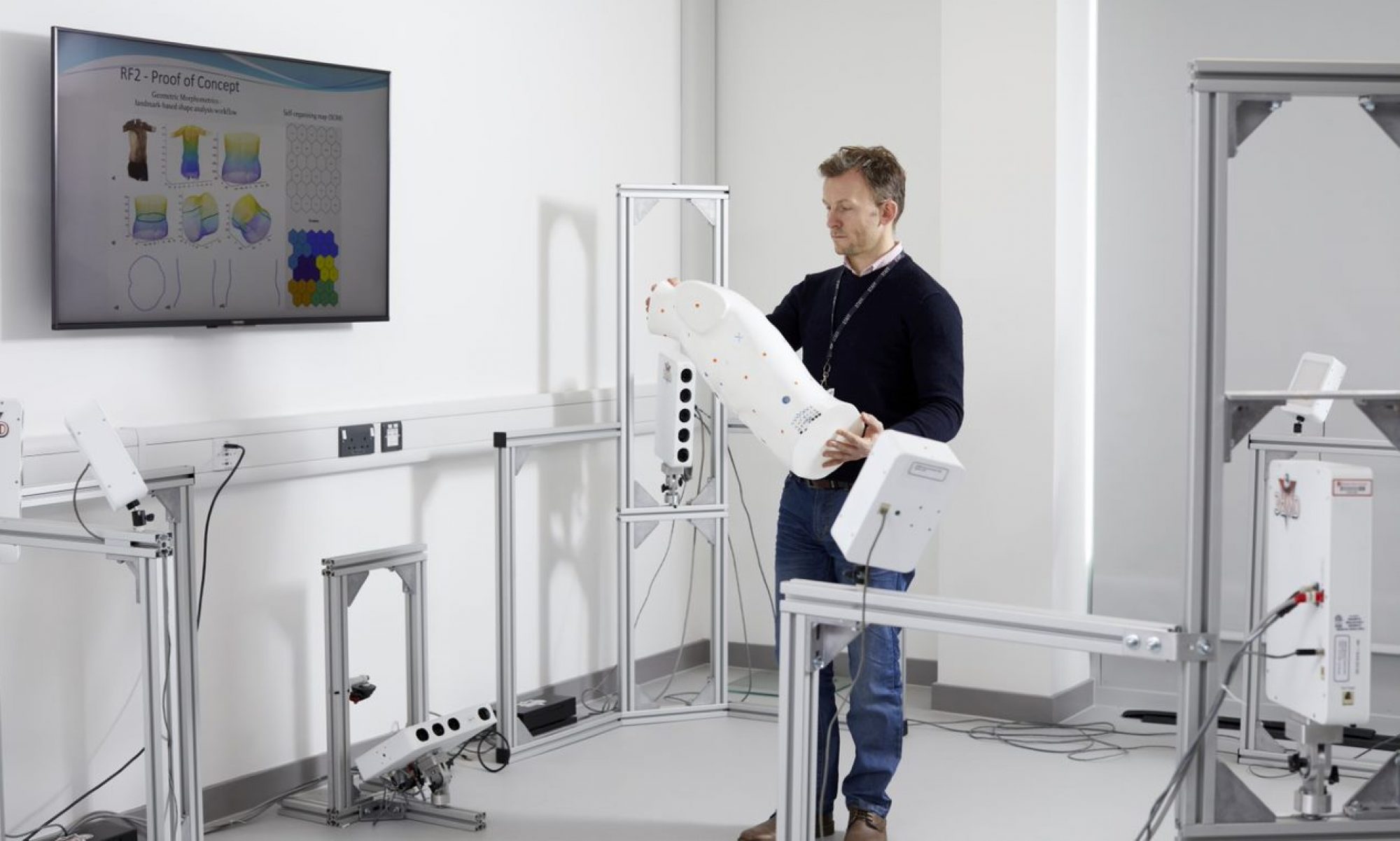
Three-dimensional (3D) surface imaging (also known as 3D body, optical or photonic scanning) creates digital 3D images of the external geometry of the human body, which when stitched together creates a digital -to scale – representation, herein referred to as a digital model (also known as a humanoid, avatar, or twin). Within the Sports Engineering Group (SERG) at Sheffield Hallam Univeristy (SHU) we use an array of 3D imaging system to capture, in a digital 3D form, the human body and equipment for the purpose of critically evaluating or designing, methods and equipment in performance and health.

However, we have recently been working on a fascinating intersection of sports engineering expertise and the worlds of art and theatre. Within this blog article we will revisit two recent case studies of or work and delve into the profound impact when technological acumen meets the unrestrained world of artistic innovation, opening new dimensions for expression and pushing the boundaries of what’s possible in the intersection of sports engineering, art, and theatre.

CASE STUDY: Integrating 3D imaging into theatre  

Beck Gadsby, Founder of Inside Theatre and Sheffield-based Theatre Director and Producer, has a passion for experimenting with innovative digital technology for the future of performance. As the director of  5 Years, a new play written by Hayley Davis, Beck sought our 3D imaging and modelling expertise. This was used to create an animated model to explore the play’s theme of the perfect body, and what people would do to achieve it.  3D imaging experts from our Sports Engineering Research Group, Dr John Hart and Dr Alice Bullas, scanned and generated digital 3D and miniature physical models of both actors in the play. The 3D model of the lead actor was then animated by Games Art Course Lecturer and Character Design Specialist, Jamie Gibson. 
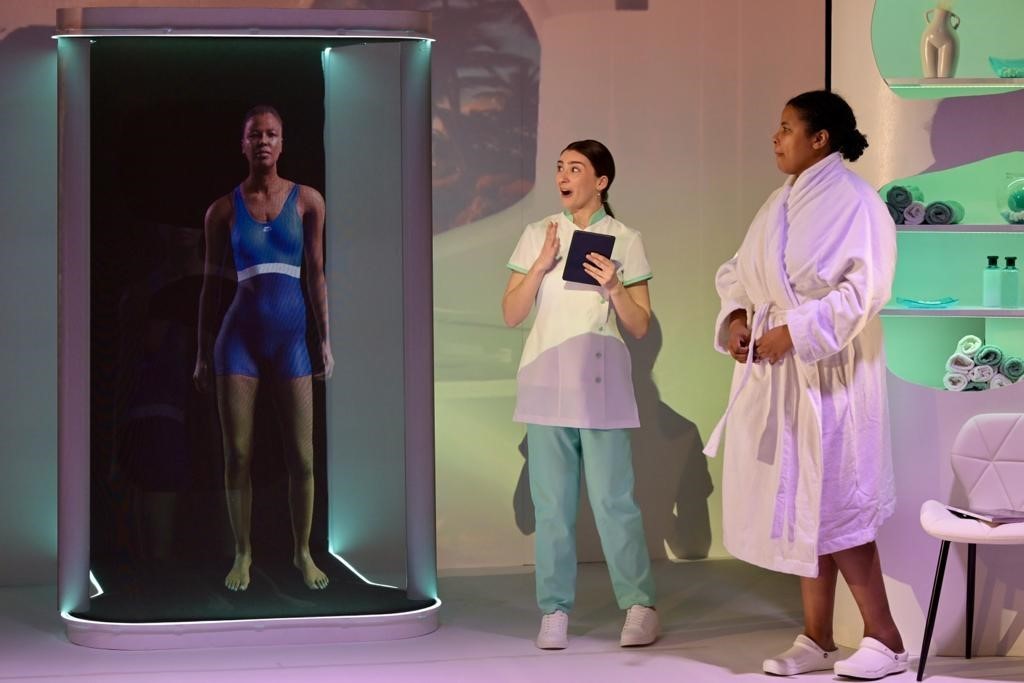
Images provided by Mark Turner 

The animated 3D and miniature physical models are now integrated into the 5 years play, set to tour around the UK in 2023. 

  “By using this technology, we were able to demonstrate the concept of the piece – what do we lose in the pursuit of perfection – in a more tangible and visual way. It has been very well received by audiences who have said it is like a third actor on stage.”  Beck Gadsby, Director, 5 years  

CASE STUDY: Integrating 3D imaging into theatre  

Jennifer (Jen) Booth, is a Lens Based Artist & Educator who’s work responds to the labour of the female body after & during disease, with conceptual methodologies, engagement, photo installation & education. Jen sought to generate several 3D images of her external form from which moulds could be developed into order to help process her project titled: *Ah Pooka SAKE : *. Within which Jen explores *Porcelain Doll Syndrome and the post environmental effects  & trauma on the diseased female form, and how this is documented and explored through installation and performative based creative practice  *

Once again, the 3D imaging experts from our Sports Engineering Research Group, Dr John Hart and Dr Alice Bullas, 3D scanned and generated digital 3D and, miniature and life size, physical models of Jen. Simon Goodwill, Head of the Sports Engineering Research Group said: “The potential translational applications of our sports engineering are vast from health to, as this project has shown, art. We are delighted we have been able to assist Jen with progressing her project and look forward to all visiting and celebrating the exhibition once complete.”

The digital 3D and, miniature and life size, physical models are now being used by Jen to generate the moulds for her project and assessing the future development and funding of subsequent work.

“This experience has given me  the opportunity to have a physical   model to enable creative dialogue and to nurture cooperative practice and knowledge across the Arts, Science Wellbeing and Sport, and to explore with industry & Academic specialist .” Jennifer Booth, Artist & Director of Typeset.  

This work demonstrates the potential, wide, interdisciplinary impact of our imaging technology in Sports Engineering, from the arts and theatre to ergonomics, fashion or design. The research, in combination with our Sheffield Multimodal Imaging Centre and the strategic partnership between Canon Medical and the Advanced Wellbeing Research Centre provides the perfect opportunity for body imaging research and consultancy.  

This work was funded through the European Regional Development Fund: Digital Innovation for Growth (DIfG).  While DIFG is no longer accepting projects.

This blog article is taken from the SERG blog.

For more information about work we do in SERG check out our website, our annual review or our MSc Sports Engineering course.
CASE STUDY: How our scanning technology is helping businesses get ahead

High quality digital anatomical models are used in a wide range of disciplines, including medicine, archaeology, zoology, sport, and art and design. Using 3D surface imaging technology at the Sheffield Multimodal Imaging Centre (SMIC), Sheffield Hallam researchers have developed detailed digital models for education, research, prototyping and product development.

From dentistry to design

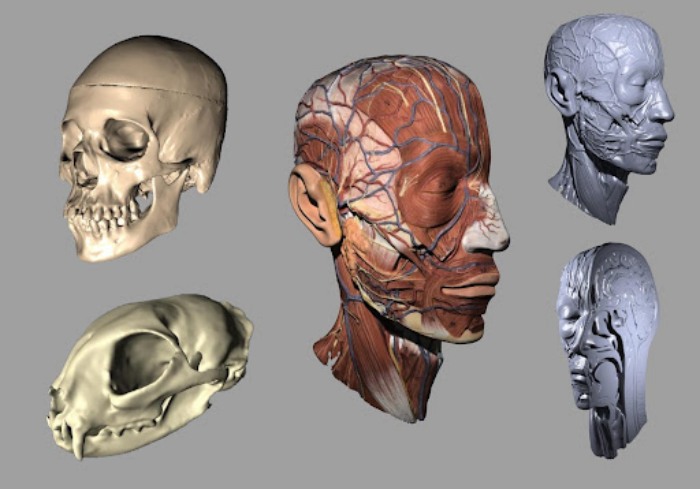
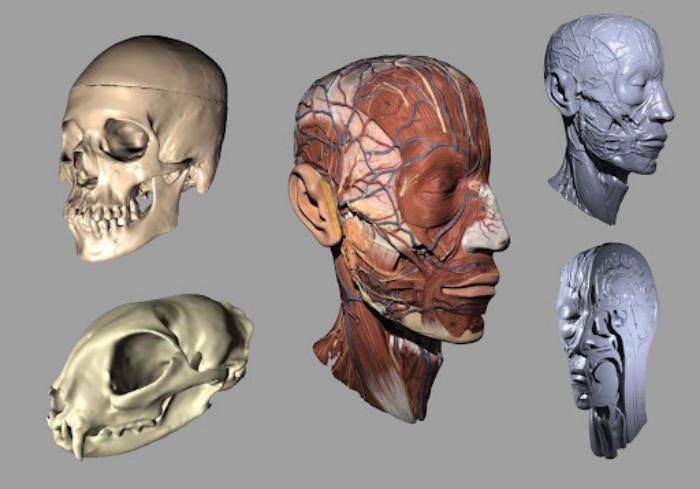
The Sheffield Hallam Sports Engineering Research Group (SERG) has a history of delivering scanning services in the creation of detailed human and veterinary anatomical headform models. These have been used by a wide range of businesses and are always tailored to the end user’s needs.

Examples include the creation of a digital model of a human skull for use in a dental school, and model headforms for research with a speech and language therapy unit. They also worked with an artisan jeweller on a solid silver cat skull, creating a geometric model for use in the casting process.

A selection of digital anatomical headform models

Testing Cardiovascular devices

SMIC’s scanning equipment has also been used by cardiovascular researchers, who needed models of commercially available cardiovascular devices to understand their performance. Key to this was the accuracy of the underlying geometrical representation of the device. 

Working with medical researchers from Sheffield Teaching Hospitals and Romanian Institutes, SERG used the scanning solutions at SMIC to measure a series of heart valve types and generate accurate digital simulations.

Developing bespoke products

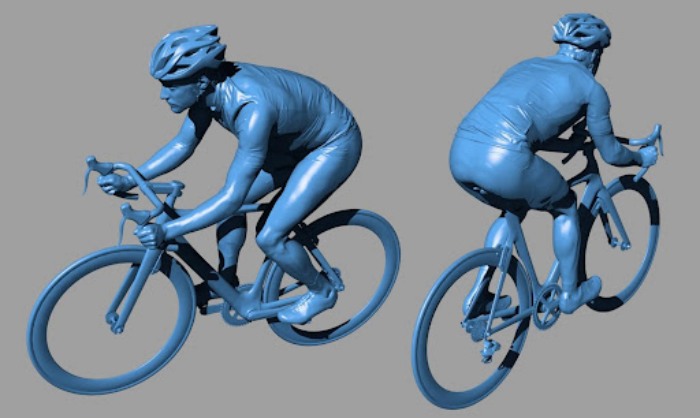
Accuracy is also key to developing and prototyping bespoke products. The scanning technology at SMIC has been used to develop orthotic products, face masks, ergonomic grips for paralympians and equipment for Olympic athletes. It’s also benefited product developers across the sports industry, allowing them to create bespoke, more representative products and methods.

Digital model of a cyclist on a bike

This blog article is taken from the SMIC website.

NEWS: Dr Alice Bullas researcher awarded prestigious Future Leaders Fellowship

Sheffield Hallam University morphology researcher, Dr Alice Bullas, been awarded a £1.6m Future Leaders Fellowship from UK Research and Innovation (UKRI) to develop new body measurement methods for children living with obesity.

Alice has been recognised as one of the most promising science and research leaders in the UK, securing one of 75 fellowships announced today (Monday 4 December).

The Fellowship will fund a five-year study to identify the most accurate and suitable ways to assess the health of children, with a focus on childhood obesity. The project is centred around developing new approaches for data collection of external body shapes, body composition and health measures from 400 children from diverse backgrounds across Sheffield.

The full SHU press release can be viewed here.

SHU HRI Internship Summer 2022

Advanced Human Body Measurement – service development, research execution & publication development.

4-week paid research internship

Sport Engineering Research Group (Dr Simon Choppin – Lead)

Project description:

Body measurement is fundamental to several research fields, including: ergonomics, health, nutrition, sport and fashion. In the Morphology Research Group at the AWRC, we specialise in body measurement and are currently developing an ‘Advanced Human Body Measurement’ service. This service will open the laboratory and our expertise to members of the public, sports clubs and weight loss groups. They will be able to take advantage of advanced body measurement to monitor changes to their body following training regimes or weight loss programmes (for example). Our service gives the ability to track body fat percentage, body size and shape. Due to the advanced information we can capture, we can create detailed reports over time. These reports will not only show changes in body weight and fat percentage, but will include detailed 3D information about where the body has changed in size and shape. This information can be navigated in 3D using computer visualisation, or even printed into a physical representation. We hope that access to more detailed information will help users of the service to maintain motivational drive and make lifestyle interventions more effective in the long-term. As well as, help the research group build a database of body scans that can be used in future research.

We seek a an intern to assist in:

  • The development of our service – 7 days
    • Recruit participants from the University Staff
    • Assist in capturing body measurement data, using our 3D scanner an manual tools
    • Help to process the measurement data and develop measurement reports
    • Assess satisfaction of participants, gaining feedback on the service
    • Research appropriate timings and costings for the service, make enquiries with other companies offering similar services
    • Consider the logistics of delivering a service within the AWRC.
  • Research into the efficacy of childhood measurement processes – 5 days
    • Assist in developing an ethics submission
    • Help to pilot and prepare for a data collection involving measurement of children aged 4 – 12 years old
  • Assist with the editing of an research publication: “3D surface imaging devices and body composition estimation” – 1 day
  • Help to process a large datasets for a research publication: “Assessing the efficacy of shape measurement in the prediction of Type II diabetes risk” – 7 days.

Student outcomes:

  • Experience of the development and execution of consultancy research / services
  • Teamwork
  • Training and practice with anthropometry techniques (including: BodPod and 3D body scanning training)
  • Experience of working with a large dataset
  • Experience of academic writing

Candidate Profile:

We are looking for candidates that have experience of working with the public and/or research participants. The applicant should be proactive and have experience of working independently. An interest in health and wellbeing research and the area of health assessment is desirable. If you have experience of data processing or working with large datasets this is desirable but not essential. We will cater to the skills, experience and desires of the successful candidate.

Project Location:

Project team background:

The morphology research group consists of Dr Alice Bullas, Dr Michael Thelwell and Dr Simon Choppin who will all support the student during the placement. We have a dedicated morphology Laboratory at the AWRC in which the intern will be able to work, we will also ensure that at least one member of the group is present every day during the internship for on-going contact and support. We have a laptop and computing resources the intern can work on during the internship and a general office is available at the AWRC that the student will be able to access and use as they wish. There is an operational support team at the AWRC that will induct the intern, giving them access to the building and spaces for use during the internship.

We will co-ordinate weekly update meetings for the whole team so that progress and any problems can be discussed with everyone.

If you wish to discuss this opportunity with us please contact: Dr Simon Choppin (s.choppin@shu.ac.uk)

Apply here . Deadline 5 pm 10th June