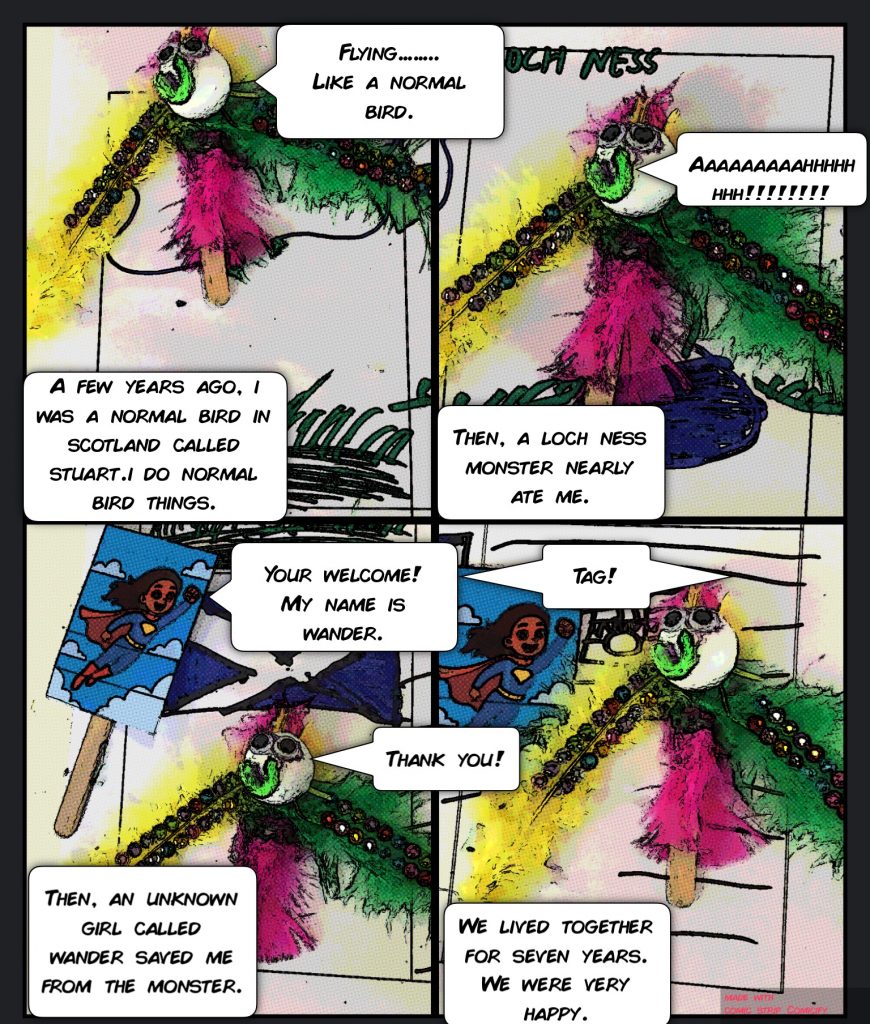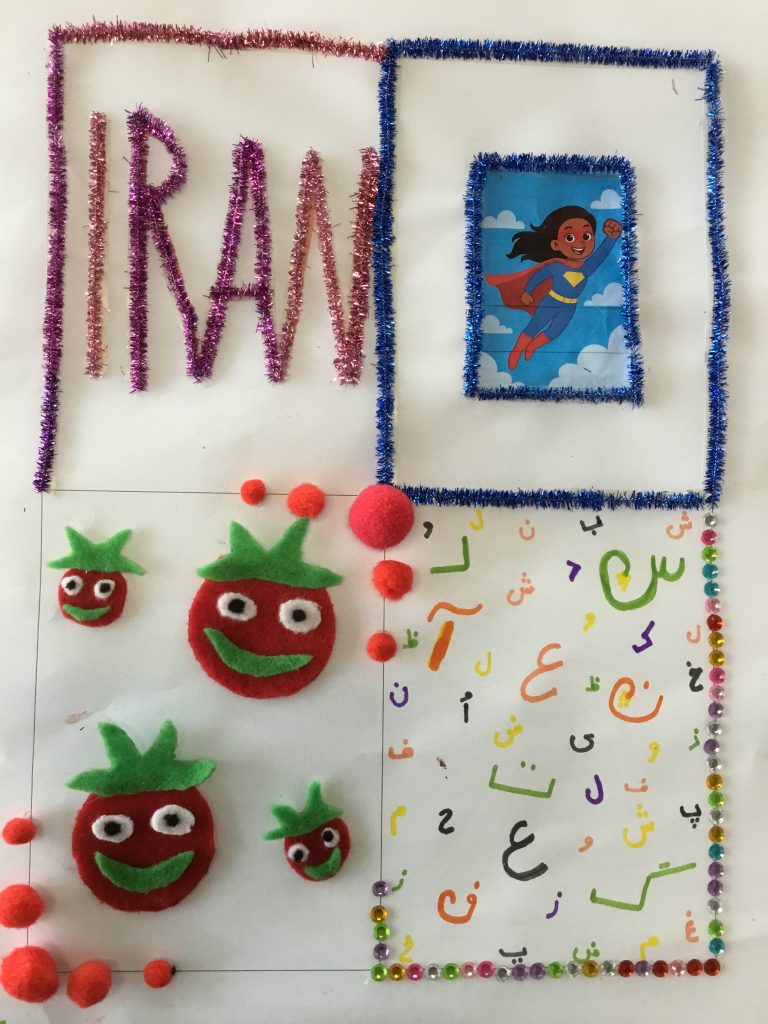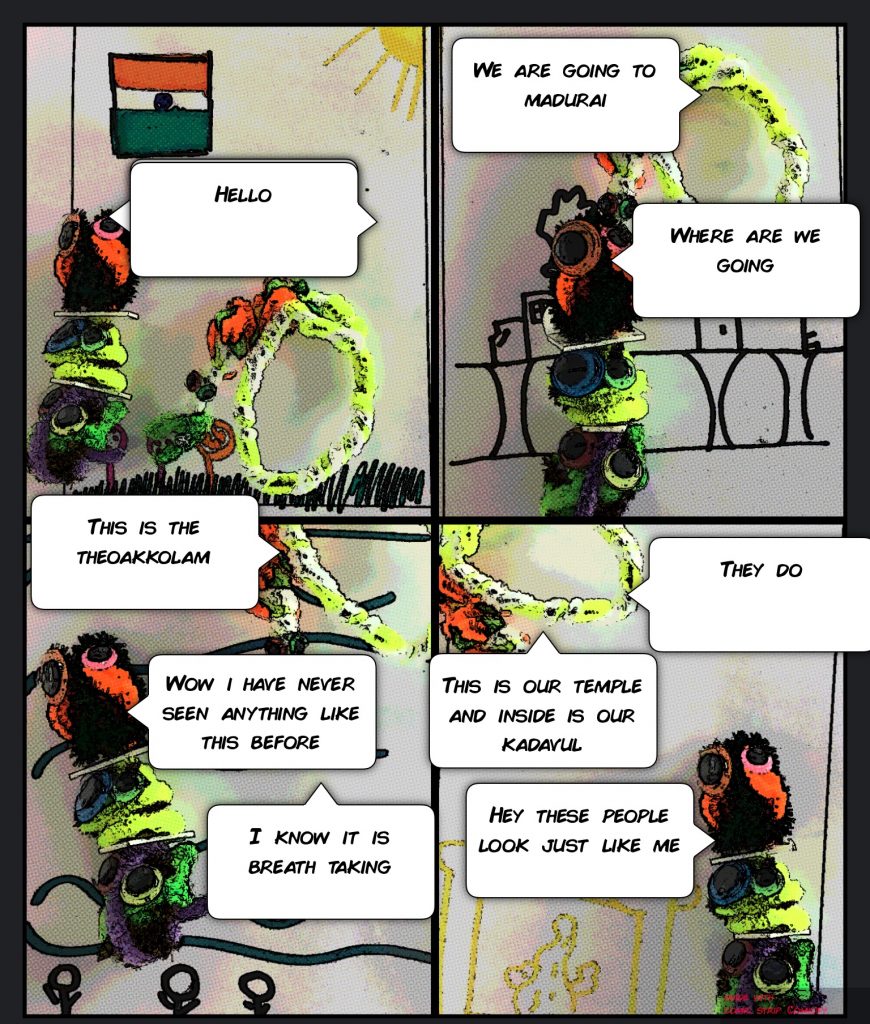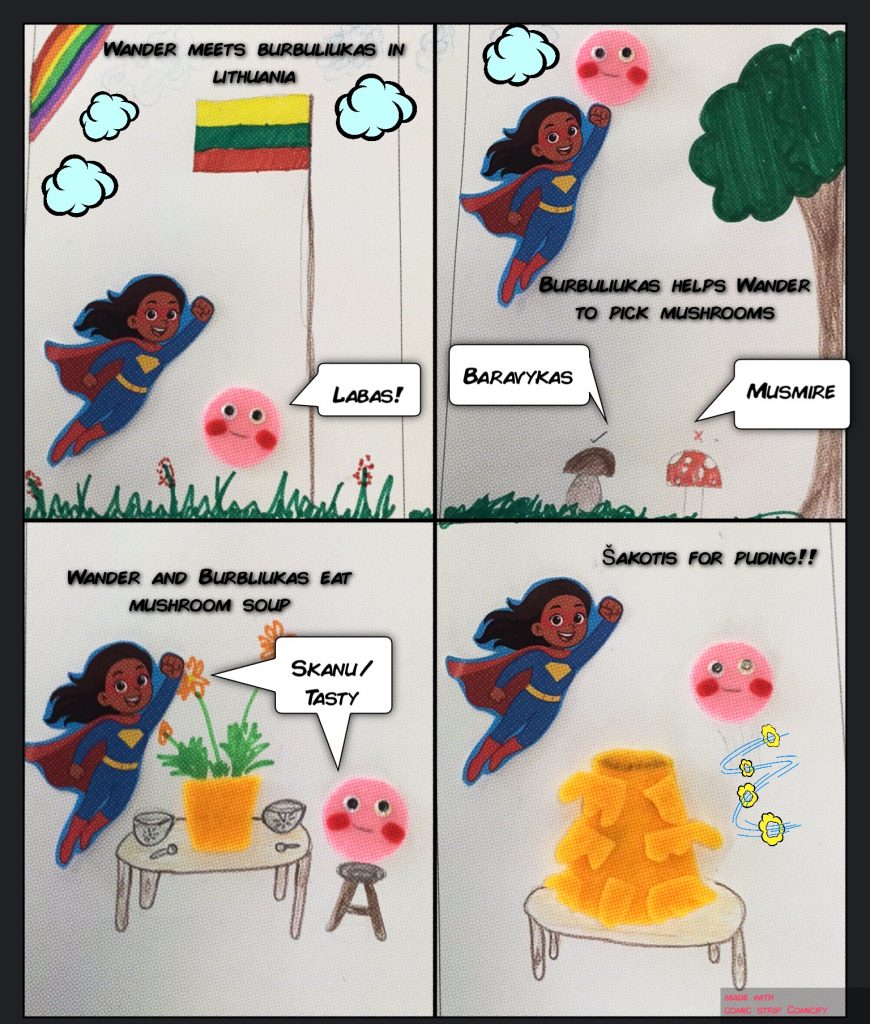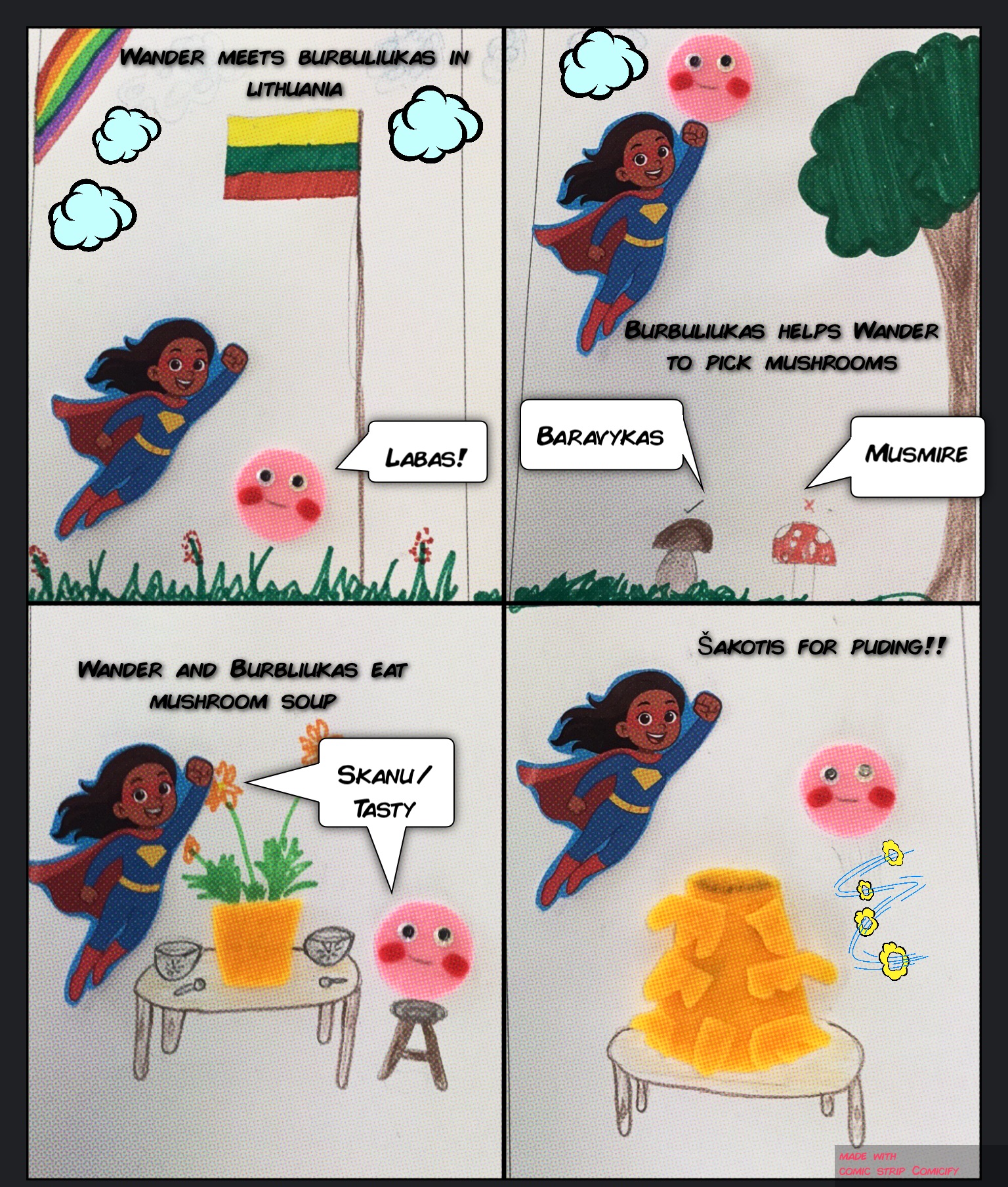
Last week I had the pleasure of running an ESRC Festival of Social Sciences event at Sheffield Hallam University titled Multilingual Comic Making. The event brought together multilingual families in Sheffield to tell stories, drawing on their full communicative repertoire (speaking, drawing, crafting, moving, vocalising). I was supported by Sexton Julia and Robyn Green who brought in valuable playwork experience, developing the space as inclusive and welcoming to linguistic and cultural diversity and rejecting ablist and colonial thinking.
The translanguaging approach we applied was developed in diverse early childhood classroom settings, collaboratively with teachers as part of an Early Careers Research and Innovation Fellowship work at Sheffield Hallam University. Through the ESRC FOSS event we wanted to understand how families would respond to this approach when it is taken out of the classroom context and not bound by the constraints of curriculum expectations and performativity. Instead, we wanted to see this as an opportunity to create translanguaging space – one in which families can engage with stories in materially, culturally and historically embedded ways. Below is some of the wonderful translanguaging work which children and families developed during the workshop. I say developed as there were iterative cycles of creating, talking, making, remaking and adding layers, at times by the grownups and at other times by the children, a living work in continuous progress. Our focus was never on a finished product or outcome; I believe this more than anything created spaces for moments in which translanguaging came to the surface.
Based on this work and with the permission of the parents we plan to develop an open educational resource for classroom and community settings.